
Ventilation and air conditioning systems are critical mechanical systems for ensuring indoor air quality, maintaining thermal comfort, and safeguarding worker health. Periodic inspections of these installations are conducted in accordance with the Health and Safety Conditions in the Use of Work Equipment, relevant standards, and legal requirements.
1. Periodic Inspection Criteria
The following technical criteria are taken as a basis for the periodic inspections of ventilation and air conditioning systems:
- System Design and Project Compliance: The installation is evaluated for its compliance with the original project design, capacity calculations, and intended use.
- Ductwork and Connection Elements: Duct systems, joints, hangers, and support elements are inspected for air tightness, deformation, and corrosion.
- Fans and Air Handling Components: Fan housings, blades, bearings, and drive systems are evaluated for mechanical integrity and vibration levels.
2. Periodic Inspection Methods
Periodic inspection activities are conducted in an impartial, independent, and traceable manner using the following methods:
- Visual Inspection: All installation components are visually inspected to evaluate their mounting security and overall physical condition.
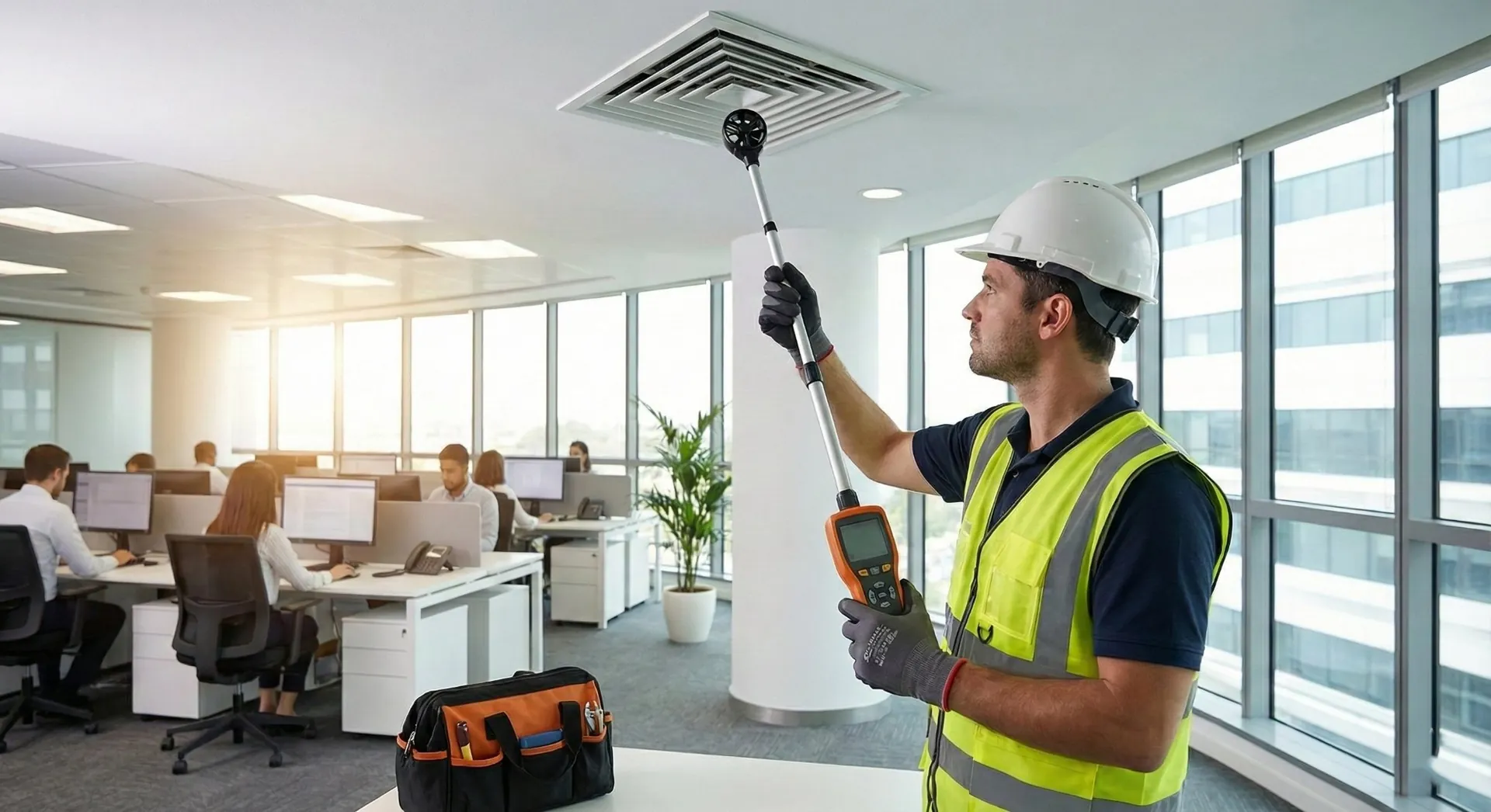
- Flow Rate Measurements: Airflow, air velocity, and duct pressures are measured using calibrated instruments and compared against the original design values.
- Engineering Evaluation: All gathered data and measurement results are analyzed in accordance with engineering calculations and standard criteria to establish a final compliance decision.
3. Reporting and Compliance Decision
The report prepared following the periodic inspection clearly includes the applied inspection methods, measurement results, regulatory and standard references, and the compliance status. The compliance decision is based solely on objective technical data and measurable criteria.
Conclusion: Periodic inspections of ventilation and air conditioning systems are carried out in accordance with the principles of independence, impartiality, and technical competence, aiming to ensure healthy, safe, and sustainable indoor environmental conditions.